Mapping Plastic Foam Density with Terahertz
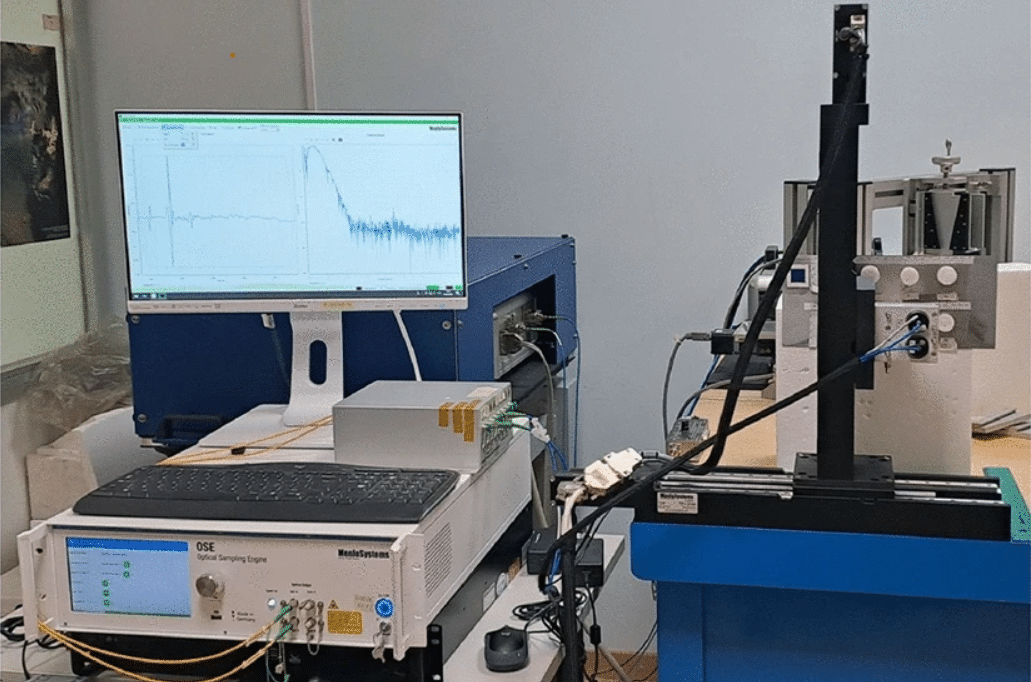
Researchers from the National Research Council of Italy, in collaboration with the University of Naples Federico II and the Scuola Superiore Meridionale, have developed a novel, non-invasive method for estimating the density profile of plastic foams using terahertz (THz) time-of-flight (ToF) imaging, using a custom THz time-domain solution from Menlo Systems. The work offers a promising approach to fast, cheap and non-destructive foam characterization for widespread industrial use.
The development of advanced material characterization techniques plays a pivotal role in ensuring quality, optimizing manufacturing processes, and driving innovation across various industries. In this context, plastic foams are fundamental components, used extensively in packaging, thermal insulation, acoustic absorption, buoyancy and impact absorption. Key properties, such as mechanical strength, elasticity and thermal insulation, are directly related to their internal density distribution. However, achieving accurate, rapid, and non-destructive internal density measurements still remains a significant challenge, especially given the complex, often graded internal structures these materials possess.
Conventional methods for assessing foam density, like computed tomography (CT) and scanning electron microscopy (SEM), have limitations. CT, especially high-resolution micro-CT, provides detailed internal imaging but requires expensive equipment and lengthy processing times, making routine quality control cumbersome. SEM, on the other hand, captures only the 2D surface structure of materials that are inherently 3D. Thus, there is a pressing need for rapid, non-invasive, and cost-effective techniques capable of mapping volumetric density variations within foam samples.
To address this issue, the research team has proposed a new method of measuring 3D density profile of plastic foams, demonstrated on polypropylene (PP) foams, using THz ToF imaging [1]. The approach hinges on establishing a direct relationship between the effective refractive index (an average parameter depending on the sample dielectric features along the signal propagation path and its dispersive behavior in the frequency range of the probing pulse) measured via THz signals and the material’s density.

This relationship is rooted in electromagnetic theory: in non-conductive materials, the refractive index is influenced by the material’s dielectric properties, which in turn depend on its composition and internal structure. The researchers established a calibration curve by measuring known samples with uniform densities spanning from 70 to 900 kg/m³. They observed a linear relationship between the refractive index and the density within this range (an empirical result supported by theoretical models such as the medium theory by Scheller et al. [2]), allowing conversion of THz-derived refractive index data into detailed density maps without requiring precise sample thickness measurements, thus offering a significant advantage over conventional methods.
THz radiation, with wavelengths between 3 mm and 30 μm, offers unique advantages: it can penetrate materials such as plastics, ceramics, and wood to a certain extent, and is non-destructive and safe, enabling contactless measurements. Recent advancements in THz generation, via ultrafast lasers and photoconductive antennas, have enabled high-resolution imaging and spectroscopy, making THz a promising candidate for material characterization.
For their foam density characterization the authors used a custom time-domain system developed by Menlo Systems, which both generates and gathers broadband THz pulses and enables measurements in both transmission and reflection modes. At the heart of this system is the Optical Sampling Engine (OSE), which uses asynchronous optical sampling to scan ultrafast time delays without mechanical delay lines, achieving spectral resolution in the hundreds of MHz. It operates with two synchronized femtosecond lasers, delivering pump and probe pulses via fiber to Menlo’s TERA15 fiber-coupled photoconductive antennas for THz generation and detection.

The pulsed THz radiation is then directed toward the foam sample in normal reflection mode (sometimes referred to as double transmission); the sample under test is positioned on a flat metallic plane and scanned along the x–y plane, i.e. the surface plane. When a pulse encounters a sample, reflections occur at interfaces where electromagnetic properties change – mainly at the sample surface and internal layers if present. The key measurement is the time delay between the incident and reflected pulses, which encodes information about the sample’s thickness and internal refractive index. If the sample is homogeneous and thin enough to be entirely penetrated, the reflected waveform exhibits two peaks corresponding to the respective surfaces (upper and lower side) in the direction of propagation (see Fig. 1b). Since the refractive index influences the propagation speed of the THz wave, analyzing the time delay between peaks allows extraction of an effective index representative of the material along the wave’s propagation path. A layered-structure sample will result in a pulsed train waveform, providing information about the sample stratigraphy.
The technique collects data point-by-point to generate a two-dimensional map. Each pixel corresponds to a localized measurement, and the effective refractive index derived here can be converted into a volumetric density via the established calibration.
In addition to cylindrical samples of uniform density, further validation was performed on samples with complex internal structures, including graded-density foams designed for specific mechanical profiles, where the THz-derived density maps revealed non-uniformities and internal defects not visually discernable. For uniform samples, the THz-derived density estimates closely matched nominal values, with an absolute error below 10 kg/m³ and a percentage error of approximately 5%. The grated foam results were also cross-validated against high-resolution X-ray microscopy, demonstrating excellent qualitative and quantitative agreement. Over 70% of pixels exhibited errors below 50 kg/m³ despite differing acquisition times and conditions, emphasizing the robustness of the approach.
This development of a THz-based density mapping technique has transformative potential for the foam industry. It caters specifically to the need for rapid, routine, and detailed internal inspection, essential for quality assurance and production consistency. Furthermore, the method’s flexibility suggests applicability beyond polypropylene foams, extending to other plastics and foam types, thanks to the universality of electromagnetic principles.
Looking ahead, the research team aims to refine their methodology further by developing more sophisticated data processing algorithms based on inverse scattering techniques. This would allow for a better characterization of the effective refractive index along the entire propagation path, capturing variations that may occur in thicker or more complex samples. Such advancements could expand the applicability of THz density mapping to an even broader range of materials and structures, including composites and layered systems.
Author: Emma Caldwell
Original publications:
[1] Catapano, I., Zappia, S., Iaccarino, P. et al. Foam density mapping via THz imaging. Sci Rep 14, 15560 (2024). https://doi.org/10.1038/s41598-024-64856-1
[2] Scheller, M., Wietzke, S., Jansen, C. & Koch, M. Modelling heterogeneous dielectric mixtures in the terahertz regime: A quasi-static effective medium theory. J. Phys. D Appl. Phys. 42, 065415 (2009).